
These days, everyone is interested in programming and coding. But do they really understand what the fuss is about?
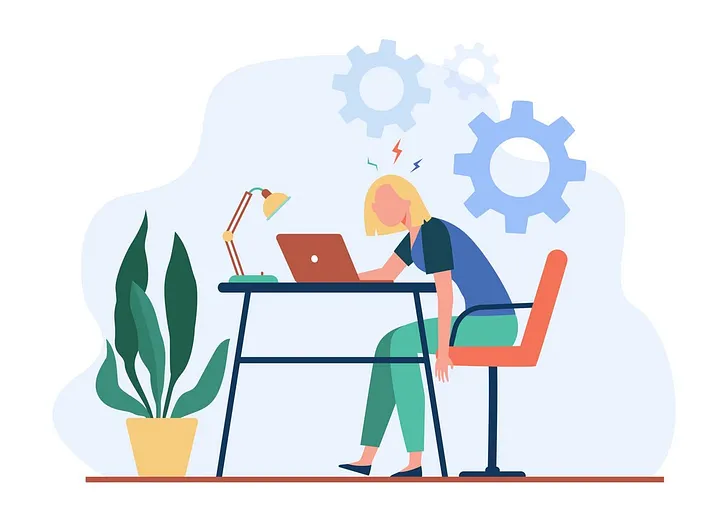
Twenty years ago, most people saw software development as a strange hobby enjoyed by computer enthusiasts who preferred computers over human interaction. Now, it’s a Super Power! Programming is now a formidable skill, revolutionizing the way we live. Even in popular media, programmers are now portrayed differently, moving away from stereotypes of socially awkward individuals to visionary figures like Mark Zuckerberg, boasting “My colleagues and I are doing things that no one in this room … is intellectually or creatively capable of doing.” 😒
However, despite its growing appeal, many still don’t fully understand what programmers actually do. Considering the heavy influence of software in our world, it’s beneficial for everyone to gain a better understanding. Below are four key points that will help you break some myths about coding life.
Número Uno
Myth: It’s about memorizing syntax! 😫
Reality: It’s not about memorizing syntax. 🤯
Common misconception: Coders need to remember the special commands in a programming language. These secret codes give them the power to work their magic.
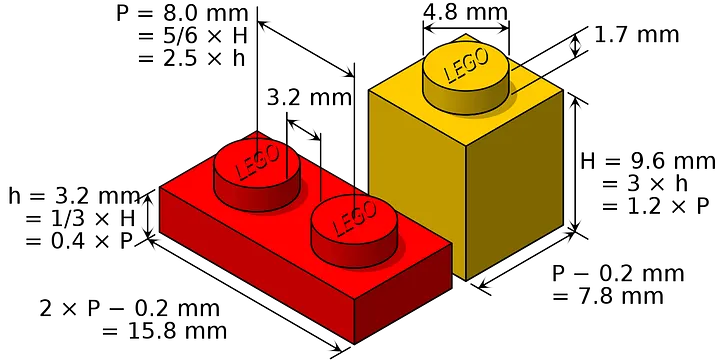
The truth is that learning the syntax of a programming language is a byproduct of learning to code. Yes, every programming language has its own set of keywords that you need to master. But these keywords are used to do special tasks like looping through complex structures of data and functions. Those structures further contribute to building larger patterns which act as ingredients to a bigger picture. Multiple patterns like these are then assembled to build the bigger picture, for an instance a mobile app. Saying a programmer needs to memorize a language is a bit like saying if you want to play with LEGO, you need to know the difference between different types of bricks.
Número Dos
Myth: Writing code is the main activity of coding! 😫
Reality: Writing code is not the main activity of coding. 🤯
Common misconception: Coders devote their time to typing furiously. And if they ever need to break into someone’s computer, they type even faster and more aggressively.

In reality, programming is not a finger fitness routine, it’s a structured sequence of activities. Below is a compressed format:
-
Planning: This is the design stage, where a programmer needs to understand the scattered requirements of a business, select the patterns/ingredients needed and spec out a model of logical code components. This model becomes the platform that supports your code.
-
Coding: Even coding is less than 50% typing! Developers spend plenty of time compiling, trying things out on their machines, and tweaking.
-
Testing: This is the part where you discover the gaps between your plan and its realization. This stage requires profiling of your code performance and people’s reaction to the user interface. Oftentimes a lot of development happens at this stage, and sometimes even pushed back to the planning stage.
It may sound too simple, but there’s a grain of truth in the idea that skilled coders write less code. Professional programmers spend time on various tasks that support their code. That means a good programmer is more likely to be found staring into the distance than typing furiously.
Número Tres
Myth: It’s all about Math! 😫
Reality: It’s not all about Math. 🤯
Common misconception: Calculus means nothing to programmers. Too easy.
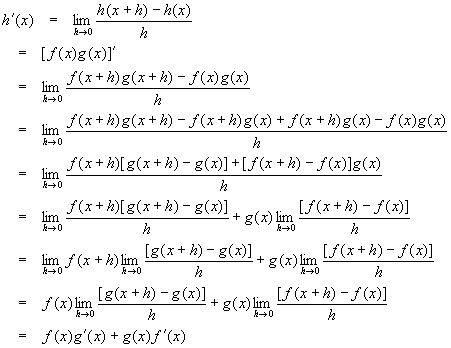
Part of the confusion between programming and math, stems from the fact that code draws heavily on a certain type of logic. Technically, logic is a branch of discrete mathematics — but then again, so is the formal logic you might use to win an argument with your uncle at a family dinner.
Practically speaking, the logic in code is all about breaking complex processes down to simple steps that can be explained to an idiot (that’s the computer). It’s not like proving a math theorem. In fact, if you’re a business programmer writing in a modern-day programming language, you probably don’t need any math skills. (Slackers rejoice!)
Having a background in math-heavy areas of computing can be beneficial when delving into topics like machine learning. Understanding the underlying mathematical concepts allows you to ask relevant questions, identify limitations in analyses, determine necessary source data, and define achievable outcomes. But even still, the goal is to control these features in your code, not to build them yourself.
Número Cuatro
Myth: It’s boring! 😫
Reality: It’s not boring. 🤯
Common misconception: Coders sit on a desk all day and just code.
Does programming involve tedious tasks? Yes. However, despite occasional dull moments, programming is considered one of the most engaging ways to spend your workday. That’s because programmers are paid to solve problems, which means they’re paid to learn and discover.
At the core of programming lies the art of problem-solving. You’re faced with a task and your mission is to plan the most effective program to solve it. Yes, this can be painstaking and fiddly — for instance, there are moments in programming when your code does 99% of the things that you want it to, and you can’t figure out what’s going wrong 1% of the time, so you have to comb through all of it looking for the mistake. However, more often than not, programming feels like unraveling a captivating logic puzzle. And when everything falls into place, precisely as you envisioned, boredom will be the furthest thing from your mind.
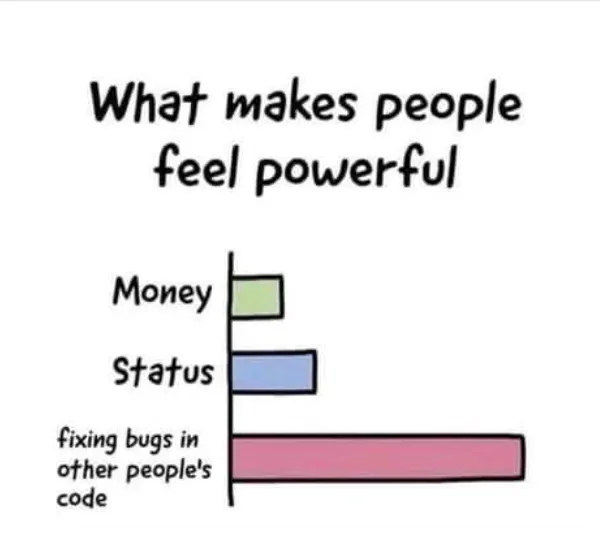
In a word, programming culture is special. So if you’ve reached the end of this article and you’re not already a programmer, consider this an official invitation to join us. Take a learn-to-code course. Try a hobby project. Because the best way to learn about programmers is to become one yourself. 😉